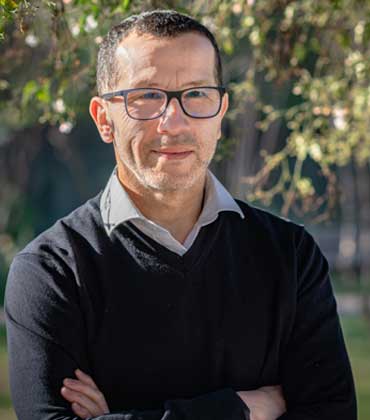
In 2007, Claudio Soto Angelo commenced his professional career as a physiatrist and head of physical medicine at CRS Cordillera Oriente. Fast-forward to 2021, he landed at Clinica Los Coihues where he currently operates as the Chief Medical Officer.
Covering many phases of the advances of technology entails keeping an open eye for new threats alongside advantages. The secret is the mindful facilitation of digital tools to squeeze maximum benefits, especially for the assisted living and healthcare sectors. Highlighting this need is Claudio Soto Angelo, who propels readers to holistically embrace technological advances through exemplifying in-house actions.
Staying adaptive and alert
In a world where technology advances astonishingly, elder care faces a critical crossroads: the adoption of sophisticated innovations or a return to basic yet effective approaches. Current trends highlight promising technologies like telemedicine, wearable devices, robotic assistance, and artificial intelligence for predicting health conditions. These tools aim to enhance the quality of life for older adults, offering solutions ranging from remote monitoring to augmented reality and social connectivity platforms. However, it's essential to consider the potential drawbacks of over-reliance on these technologies, such as the risk of social isolation or the exclusion of those who are not tech-savvy. This caution is necessary to ensure we are genuinely prioritizing the proper needs and not just following the latest trend.
The real challenge lies not in deploying the latest technology but in crafting solutions that promote functional independence and self-reliance among older adults. The most impactful innovations should combine usability and affordability, fostering social interaction and active aging.
Beyond technology, the heart of innovation lies in community-centric approaches. These are the solutions that truly make a difference in elder care.
Collaborating for fitness
Beyond technology, the heart of innovation lies in community-centric approaches. These are the solutions that truly make a difference in elder care.
A compelling example of this holistic approach is the Acción Senior program, an initiative that transcends simple technological implementation. This program, for which I am an advisor, is hosted in a fitness center (Acción Crossfit®) and focuses on enhancing the physical abilities of older adults through a model that integrates health and prevention. The key is adapting physical exercise to individual capabilities while maintaining a vital community component. For just USD 1, over 100 participants aged between 67 and 85 engage in sessions that work on strength, power, balance, range of motion, muscular and cardiovascular endurance and coordination.
The success of the Acción Senior program is a beacon of hope, not only in program adherence—with 70% of participants exercising three times a week and 30% attending daily—but also in the observed physical and metabolic benefits. Participants have experienced reductions in abdominal circumference, increased muscle mass, and decreased body fat percentage. Typically associated with younger people, these results underscore the potential of traditional approaches when carefully adapted and applied to the older population. This success story should inspire confidence in the effectiveness of community-centric approaches in elder care.
In addition, seniors accessing this program encourage their activity and social participation, proving that working under a clear conceptual framework, focused on people in a personalized way according to their profile and at a low cost, produces good functional results.
Returning to roots: innovation with real impact
We must ask ourselves: Are we innovating just for the sake of it, or are we seeking solutions that, while simple, can profoundly impact the lives of older adults? The answer may lie in balancing advanced technologies with revitalizing tried-and-true strategies, like supervised physical exercise. It is crucial to remember that innovation is not exclusively synonymous with cutting-edge technology; often, the most effective and sustainable approaches focus on strengthening the community, enhancing accessibility and fostering self-reliance.
This balanced approach to elder care innovation should guide our perspective and decision-making, providing reassurance and a clear path forward.
Combining digital tools and traditional practices allows for better adaptation to older adults' needs and ensures a more holistic and human-centered approach. Ultimately, innovation in elder care resides not merely in new technologies but in how these can be integrated to maximize quality of life and independence.
Instead of chasing the next significant technological innovation, we should consider combining traditional tools and technology that enables active and dignified aging. The new and true revolution in elder care may be far more accessible by combining these two worlds. Let’s embrace a future where innovation meets humanity and where the best of both approaches come together to empower our elders. Now is the time to create a better path that respects the past and embraces the future. Let's lead the change!